
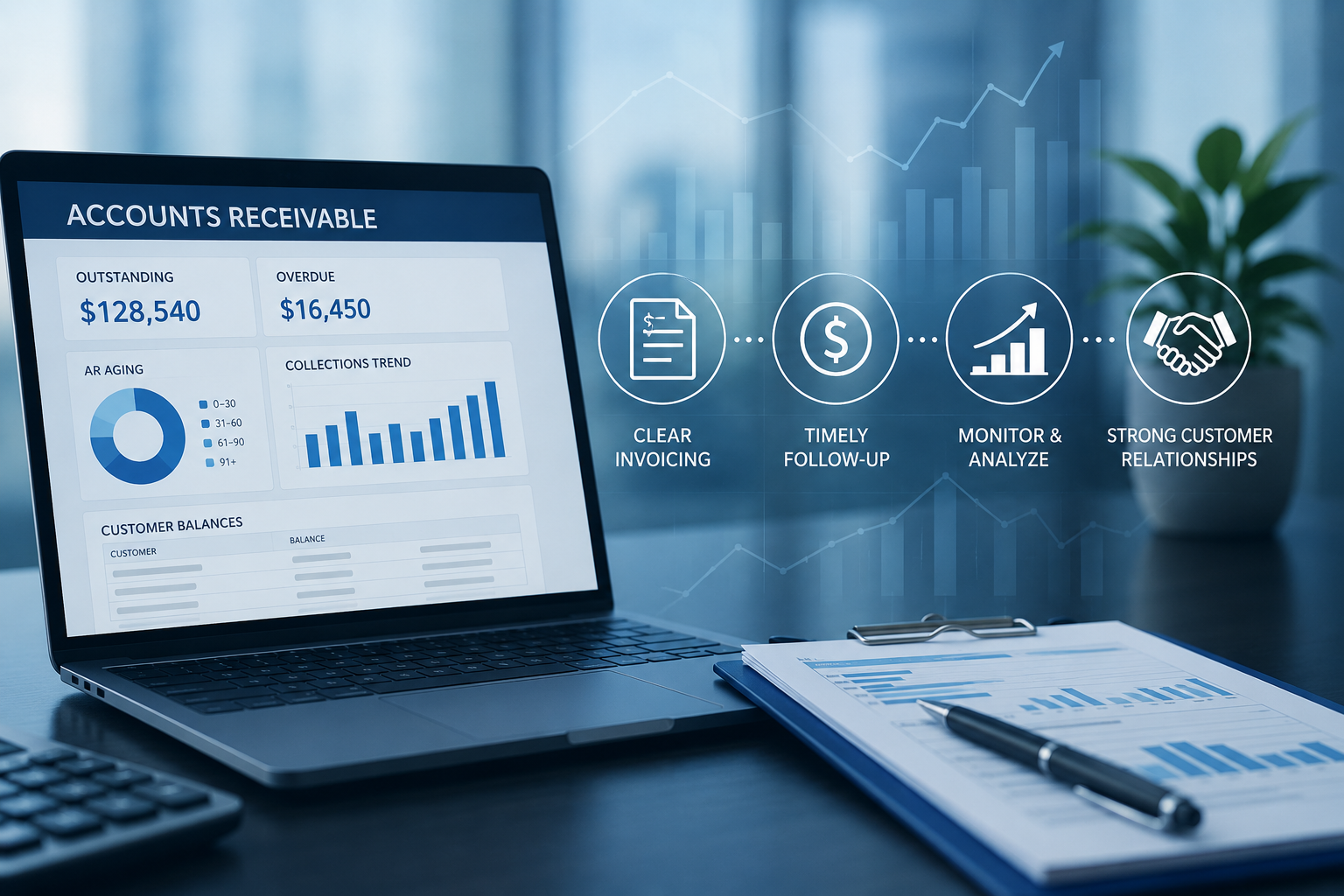
Best Practices for Managing Accounts Receivable
Managing accounts receivable effectively is one of the most important responsibilities for any business that provides products or services on credit. While increasing sales and generating revenue are essential for growth, a business cannot remain financially healthy unless it successfully converts those sales into actual cash. Accounts receivable represents outstanding payments owed by customers who have already received goods or services, meaning that poor management of these balances can create significant pressure on a company’s financial position.
Many businesses experience cash flow challenges not because they lack customers or sales opportunities, but because payments are delayed for too long. A company may appear profitable based on its financial statements while still struggling to pay suppliers, employees, operating expenses, and investments because too much money remains tied up in unpaid invoices. Effective accounts receivable management ensures that businesses maintain better control over incoming cash, reduce financial uncertainty, and create a stronger foundation for sustainable growth.
A successful accounts receivable process involves more than simply sending invoices and waiting for customers to pay. It requires clear payment policies, accurate record keeping, regular monitoring, effective communication, and consistent follow-up procedures. By improving these areas, businesses can reduce late payments, minimise bad debts, and strengthen relationships with customers while protecting their own financial stability.
Understanding the Importance of Accounts Receivable Management
Accounts receivable management refers to the process of controlling and collecting payments owed to a business by its customers. It includes everything from establishing payment terms and issuing invoices to tracking outstanding balances and following up on overdue accounts. A well-organised accounts receivable system allows businesses to understand their expected cash inflows and make better financial decisions.
Cash flow is one of the biggest factors influencing business success. Even companies with strong sales growth can face difficulties if customers consistently delay payments. When outstanding invoices continue to increase, businesses may need to rely on external financing or reduce spending to cover their day-to-day obligations. Over time, these issues can limit growth opportunities and create unnecessary financial stress.
By managing accounts receivable properly, businesses can maintain a healthier balance between sales growth and financial security. Regular monitoring of customer payments allows companies to identify potential problems early, improve collection processes, and make informed decisions based on accurate financial information. Businesses looking to strengthen their accounting procedures can also benefit from professional support, such as the financial services and accounting guidance provided by Lampkin CPA Advisors.
Establish Clear Payment Policies and Expectations
One of the most effective ways to improve accounts receivable management is to establish clear payment policies before entering into customer agreements. Many payment problems occur because businesses fail to communicate expectations clearly at the beginning of a relationship. Customers should understand when payments are due, what payment methods are available, and what procedures will apply if invoices are not paid on time.
Payment terms should be designed carefully based on the needs of both the business and its customers. While offering flexible payment arrangements can help attract new customers and encourage sales, overly generous terms can negatively affect cash flow. Businesses should consider how long they can realistically wait for payment without affecting their ability to operate effectively.
Clear policies also create consistency. When customers know exactly what is expected, there is less opportunity for misunderstandings or disputes. Businesses should communicate payment terms before providing products or services and ensure that these conditions are included clearly within contracts, agreements, and invoices.
Improve the Accuracy and Efficiency of Invoicing
Accurate invoicing is a fundamental part of effective accounts receivable management. A delayed or incorrect invoice can slow down the payment process and create unnecessary confusion between a business and its customers. Businesses should aim to issue invoices promptly after completing a transaction so that customers have enough time to arrange payment.
A professional invoice should include all relevant details, including customer information, descriptions of products or services provided, the total amount owed, payment deadlines, and instructions for completing payment. Clear and detailed invoices reduce the likelihood of disputes and make it easier for customers to process payments efficiently.
Consistency is also important when managing invoices. Using a standard format ensures that customers receive familiar and organised documentation each time they make a purchase. Businesses that maintain professional invoicing procedures often experience fewer delays because customers can quickly understand what they need to pay and when payment is required.
Monitor Outstanding Invoices Regularly
Regular monitoring is essential for preventing accounts receivable issues from becoming larger financial problems. Businesses should maintain an up-to-date record of outstanding invoices and regularly review which customers have unpaid balances. This allows management teams to identify overdue payments quickly and take appropriate action.
An accounts receivable ageing report is a valuable tool that helps businesses understand how long invoices have remained unpaid. By reviewing these reports, companies can identify customers who regularly pay late, recognise potential collection risks, and develop strategies to improve payment performance.
Without regular monitoring, unpaid invoices can easily be overlooked. Small delays can gradually become significant financial issues if businesses fail to follow up. Consistent review of accounts receivable ensures that payment problems are addressed early rather than after they have already affected cash flow.
Communicate Effectively With Customers
Maintaining professional communication with customers is an essential part of successful accounts receivable management. Businesses should not wait until invoices become seriously overdue before contacting customers. Regular communication throughout the payment process can encourage timely payments and prevent misunderstandings.
Sending reminders before payment deadlines can be an effective way to encourage customers to prepare payments in advance. These reminders should remain professional and helpful rather than appearing aggressive or confrontational. The goal is to maintain positive relationships while ensuring that outstanding balances are resolved.
When customers experience temporary difficulties, open communication can help businesses find suitable solutions. In some situations, agreeing on a structured payment arrangement may allow the business to recover the outstanding amount while maintaining a valuable customer relationship.
Use Accounting Technology to Improve Processes
Technology has significantly improved the way businesses manage accounts receivable. Modern accounting software allows companies to automate many routine tasks, reduce manual errors, and gain better visibility over their financial information. Digital systems can help businesses create invoices, track payments, send reminders, and generate reports more efficiently.
Automation can be particularly useful for businesses managing a large number of customer accounts. Instead of manually reviewing every invoice, companies can use software tools to identify overdue balances and maintain consistent follow-up procedures. This saves time and allows employees to focus on more strategic financial tasks.
Accounting technology also improves reporting capabilities. Business owners can quickly review outstanding balances, customer payment patterns, and expected cash inflows. This information allows companies to make better decisions regarding budgeting, investment, and future growth plans.
Reduce the Risk of Bad Debts
Bad debts occur when customers fail to pay outstanding invoices and the business is unable to recover the money owed. Although some level of payment risk exists in most industries, businesses can reduce this risk by implementing stronger accounts receivable practices.
Before extending credit, businesses should consider whether customers are likely to meet their payment obligations. Reviewing previous payment behaviour, assessing customer reliability, and setting appropriate credit limits can help prevent excessive exposure to unpaid balances.
Businesses should also monitor warning signs such as repeated late payments, frequent requests for extended deadlines, or reduced communication from customers. Identifying these issues early allows companies to take action before unpaid balances become difficult to recover.
Maintain Accurate Financial Records
Accurate financial records are essential for effective accounts receivable management. Businesses need reliable information to understand how much money is owed, which customers have outstanding balances, and how receivables affect overall financial performance.
Poor record keeping can lead to missed payments, incorrect reporting, and difficulties when analysing business performance. Maintaining organised financial records ensures that businesses always have a clear picture of their current financial position and can respond quickly when issues arise.
Accurate records also support better financial planning. When businesses understand their expected cash inflows, they can make more informed decisions about expenses, investments, and growth strategies.
Analyse and Improve Accounts Receivable Performance
Businesses should regularly evaluate their accounts receivable performance to identify opportunities for improvement. Reviewing payment trends can help companies understand whether their current processes are effective or whether changes are required.
Important areas to consider include how quickly customers typically pay, the amount of overdue invoices, and whether certain customers consistently create payment challenges. Analysing this information allows businesses to adjust their approach and develop more effective collection strategies.
Continuous improvement is important because customer relationships, market conditions, and business needs can change over time. A process that works well today may require adjustments as a company grows and takes on new customers.
The Benefits of Professional Accounting Support
Managing accounts receivable requires careful attention to detail, strong financial controls, and consistent monitoring. For many businesses, professional accounting support can provide valuable assistance in improving financial processes and maintaining accurate records.
Experienced accountants can help businesses review their existing procedures, identify weaknesses, and implement strategies that improve cash flow management. They can also provide financial insights that help business owners make better decisions and plan for future success.
Working with a professional accounting team allows businesses to focus on their core operations while ensuring that their financial systems remain efficient and reliable. Lampkin CPA Advisors provides accounting expertise designed to support businesses in improving financial management and achieving stronger financial control.
Conclusion: Building a Stronger Accounts Receivable System
Effective accounts receivable management is essential for maintaining financial stability and supporting long-term business growth. While increasing revenue is important, businesses must also ensure that money owed by customers is collected efficiently and converted into available cash.
By establishing clear payment policies, improving invoicing procedures, monitoring outstanding balances, communicating effectively with customers, and using appropriate accounting technology, businesses can create a more reliable accounts receivable system.
A strong accounts receivable process reduces financial risk, improves cash flow visibility, and gives businesses greater confidence when making important financial decisions. Whether a company is small, growing, or well-established, investing in better accounts receivable practices can provide significant long-term benefits and contribute to overall success.